
CCTV Surveillance Some Recent Technological Innovations
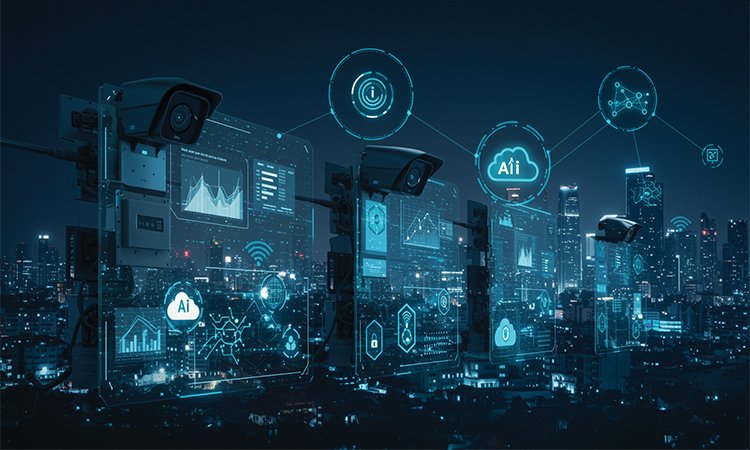
Closed-Circuit Television (CCTV) surveillance has come a long way since its inception in the mid-20th century. Once used primarily for simple video monitoring, CCTV systems have now evolved into intelligent, connected, and proactive security networks that form the backbone of modern safety infrastructure.
Technological innovation has made surveillance smarter, more efficient, and capable of real-time decision-making. Today, these systems don’t just record events—they interpret them, anticipate risks, and help prevent incidents before they occur.
In India, the adoption of CCTV surveillance has accelerated dramatically in recent years. From government smart city projects and industrial installations to retail stores and residential complexes, video surveillance has become indispensable.
The increasing sophistication of threats—ranging from petty theft to cyber-physical crimes—has driven the demand for advanced surveillance technologies that go beyond conventional video capture.
High-Resolution and Multi-Sensor Cameras
One of the most visible technological leaps has been the advent of high-resolution cameras. Modern CCTV cameras now offer ultra-HD clarity—4K and even 8K resolutions—providing unmatched detail for identification and evidence gathering. This is particularly useful in crowded public spaces like airports, railway stations, and markets where recognizing faces or number plates quickly is vital.
Multi-sensor cameras have further enhanced coverage efficiency. Instead of relying on multiple single-lens cameras, multi-sensor models use multiple imagers within one housing to deliver 180° or 360° panoramic views. This reduces installation costs, minimizes blind spots, and simplifies maintenance while offering consistent image quality across a wide area. Advanced models can even automatically stitch together images to create a seamless panoramic view, improving situational awareness for security personnel.
AI-Powered Video Analytics
Artificial Intelligence (AI) has revolutionized CCTV surveillance. Gone are the days when security personnel had to monitor hours of footage manually. Today, intelligent video analytics powered by AI and deep learning can analyze live feeds in real time. These systems can detect abnormal behaviors, unauthorized entries, unattended baggage, loitering, or sudden crowd movement—triggering alerts instantly.
Facial recognition is one of the most impactful AI-driven features. It allows identification of individuals from large databases, helping law enforcement and security agencies track suspects or verify identities in secure zones. Behavior analysis, another AI innovation, studies movement patterns to identify potential threats before they escalate.
In industrial environments, AI analytics can also improve operational safety—detecting workers without helmets, monitoring hazardous areas, or identifying machine malfunctions through visual cues. By automating such monitoring, AI not only strengthens security but also enhances productivity and compliance.
Cloud-Based and Edge Computing Solutions
Data management has become more efficient with the rise of cloud-based and edge computing technologies. Traditional CCTV systems stored video locally, making them vulnerable to data loss or limited scalability. Cloud-based surveillance systems now enable remote data storage and management, allowing users to access live or recorded footage from any location. This flexibility is particularly beneficial for multi-site businesses, government departments, and smart city command centers.
Meanwhile, edge computing processes data locally—at or near the camera—rather than transmitting it to a central server. This reduces latency, saves bandwidth, and ensures faster decision-making in time-critical scenarios. For example, an edge-enabled CCTV can instantly alert security personnel about a perimeter breach without waiting for server confirmation. The combination of cloud scalability and edge intelligence offers an optimal balance between speed, security, and cost efficiency.
Thermal and Low-Light Imaging Technologies
Surveillance doesn’t stop when the lights go out. The development of thermal imaging and low-light camera technologies has enabled 24/7 monitoring in even the most challenging environments. Thermal cameras detect infrared radiation rather than visible light, allowing them to “see” in complete darkness, fog, or smoke. This makes them invaluable for border surveillance, critical infrastructure, and industrial safety applications where visibility may be poor.
Low-light cameras, powered by Starlight and Darkfighter technologies, can produce color images under minimal illumination. These systems are widely used in urban surveillance and traffic monitoring, offering superior clarity without relying on additional lighting.
Integration with IoT and Smart Systems
The Internet of Things (IoT) has brought a new level of connectivity to CCTV surveillance. Modern systems no longer function as standalone setups—they’re integrated with fire alarms, access control systems, motion sensors, and even environmental monitors to create a holistic security ecosystem.
For example, in a smart building, when a door sensor detects unauthorized access, the CCTV system can automatically pan to that area, record high-resolution footage, and send an instant alert to the control room. In smart cities, surveillance cameras are connected to central command centers where data from thousands of devices is aggregated, analyzed, and acted upon in real time. This integration enhances situational awareness, enables predictive analysis, and helps authorities respond faster to emergencies.
Cybersecurity in Surveillance Systems
As CCTV systems become more connected, they also become more vulnerable to cyber threats. Hackers can potentially access cameras, intercept feeds, or manipulate data if proper safeguards aren’t in place. Recognizing this risk, modern surveillance manufacturers have made cybersecurity an integral part of system design.
Advanced encryption protocols, secure firmware updates, and multi-factor authentication are now standard features. Some systems employ AI-driven cyber defense mechanisms that detect abnormal network behavior and alert administrators to possible breaches. Additionally, many organizations are adopting zero-trust security architectures, ensuring that every access attempt—internal or external—is verified before granting permissions.
Artificial Intelligence in Crowd and Traffic Management
In large cities, AI-enabled CCTV cameras are helping manage traffic flow and public gatherings efficiently. Intelligent systems can identify traffic congestion, detect rule violations, and adjust signals automatically. During large events, AI cameras assist in crowd control by monitoring density levels and alerting authorities when crowding exceeds safe thresholds.
In the context of India’s Smart City Mission, such systems are already operational in cities like Hyderabad, Pune, and Surat. They contribute not only to safety but also to smoother civic management and data-driven urban planning.
Sustainability and Energy Efficiency
Sustainability has also entered the realm of surveillance technology. Solar-powered CCTV systems are now being deployed in remote areas where conventional power supply is limited. These eco-friendly setups are self-sustaining, requiring minimal maintenance and operating effectively off-grid.
Manufacturers are focusing on energy-efficient chipsets, longer-lasting batteries, and eco-conscious materials in camera production. Combined with intelligent power management features—like motion-triggered recording and adaptive frame rates—these innovations significantly reduce the environmental footprint of large surveillance networks.
The Role of Big Data and Predictive Analytics
With thousands of cameras capturing data 24/7, the amount of video footage generated is enormous. The challenge lies not in collection, but in deriving meaningful insights. This is where Big Data analytics and predictive modeling come into play. By analyzing historical footage and identifying patterns, these systems can predict potential risks—such as recurring theft zones, unsafe crowd behaviors, or machinery prone to failure.
This predictive capability transforms CCTV from a passive monitoring tool into an active decision-support system. In the future, such analytics will form the core of “intelligent surveillance ecosystems,” where human intervention will be minimal and the system itself will guide responses.
Conclusion
CCTV surveillance has entered a new era—one defined by intelligence, integration, and innovation. From AI-powered analytics and ultra-HD imaging to cloud management, IoT connectivity, and cybersecurity resilience, the transformation is profound. These systems are no longer just eyes watching silently; they are smart networks that think, analyze, and act.
As India continues to expand its digital and infrastructural footprint, advanced CCTV technologies will play an increasingly pivotal role in ensuring public safety, industrial security, and operational efficiency. The convergence of AI, cloud, and IoT will only deepen in the coming years—ushering in a future where surveillance is not just about seeing more, but about understanding better.